In this category, you will find all the products that make it possible to study the properties of sound, from its characteristics (frequency, sound intensity) to its propagation through a medium (speed of sound) and its evolution in an environment.
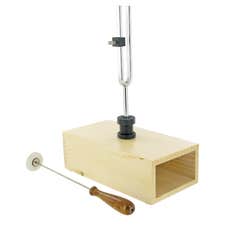
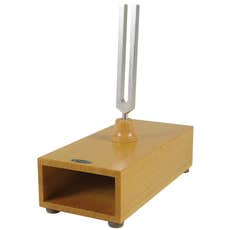
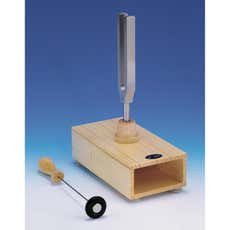
To study the characteristics of a sound, you will find tuning forks, which produce a sinusoidal signal that students can easily use, and various musical instruments: string instruments (guitar, ukulele), wind instruments (flute), vibrating instruments (xylophone, metallophone), and digital instruments (synthesizer). These instruments produce sounds ranging from the simplest to the most complex, allowing the introduction of the notions of timbre and pitch.
The Spectrasons is the specific didactic tool for understanding the link between the complex signal of a sound and its spectral representation (FFT) thanks to a powerful 3D tool.
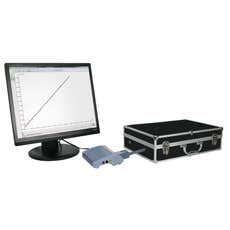
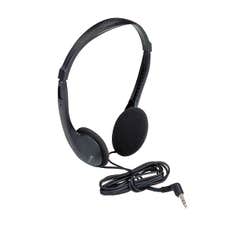
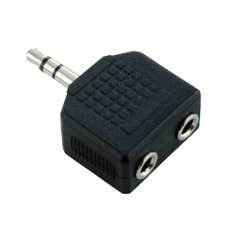
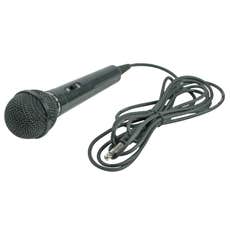
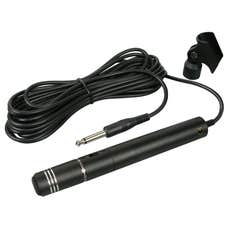
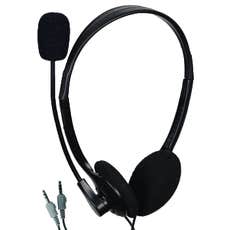
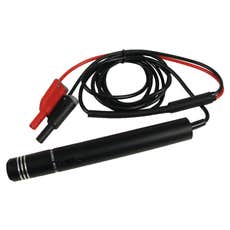
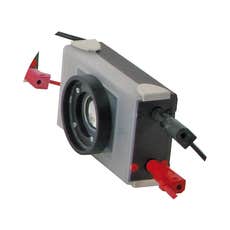
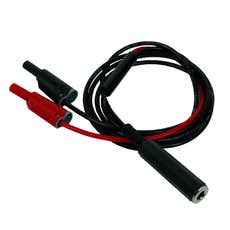
You will find common tools such as audio headsets with or without microphones to listen to and produce sounds, as well as microphones to capture sounds for analysis using data acquisition systems or with an oscilloscope. The audio accessories offered will allow you to connect these devices to the different models.
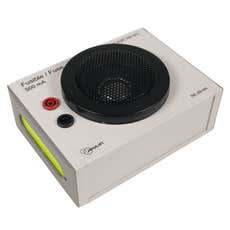
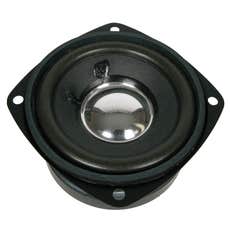
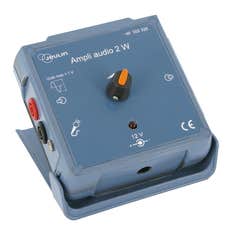
Amplifiers will provide you with a high-amplitude signal to perform acquisition or to introduce the notion of sound intensity level.
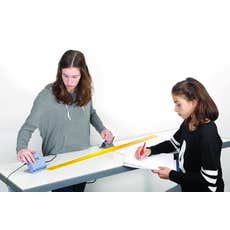
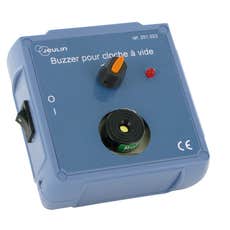
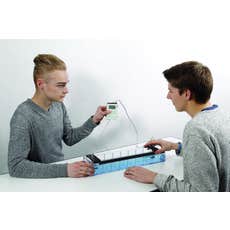
In sound experiments, you will be able to address with your students the study of the propagation of sound by studying the speed of propagation in air and in water, as well as the decrease of sound depending on the distance.
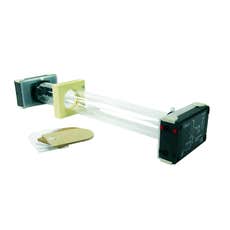
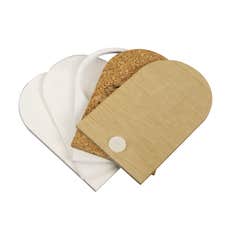
Architectural acoustics will be introduced by studying the reflection, absorption, and transmission of sound. Sound insulation can be studied with the sound attenuation tube (Ref. 302328) and the anechoic chamber (Ref. 302332), which allow several practical activities to be carried out simultaneously without noise disturbance.
Didactic GFBs are specifically designed to study phenomena within the audible range.