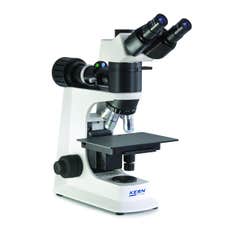
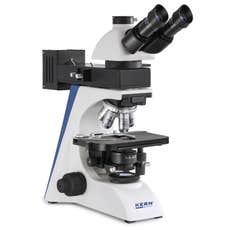
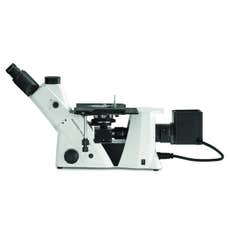
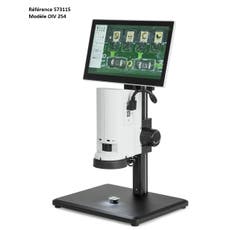
A metallographic microscope (also known as a metallurgical microscope) is an essential tool in the field of metallography, a branch of materials science that studies the structure of metals and alloys. These microscopes are designed to examine metallic samples at microscopic levels, enabling researchers, engineers, and technicians to understand the internal structure of metallic materials.
Here are the main features of a typical metallographic microscope:
Optics | Metallographic microscopes are equipped with high-quality optical components that provide clear and detailed visualization of samples. They can be fitted with objectives of various magnifications, generally ranging from 50× to 1000× or more.
Illumination | They include a lighting system suitable for observing metallic specimens. This may consist of halogen or LED light sources, as well as polarized illumination devices for specific types of observations.
Stage | Metallographic microscopes feature robust stages designed to maintain samples securely in place during examination.
Digital cameras & image analysis software | Many metallographic microscopes can be connected to external cameras via their trinocular phototube in order to capture high-resolution images of observed samples. This allows users to document their observations and easily share them with other researchers or colleagues. These cameras can be paired with image analysis software that enables quantitative measurement and analysis of various sample characteristics, such as grain size, porosity, inclusions, and more.
In summary, metallographic microscopes are versatile and essential tools for studying metallic materials at the microscopic scale. Their combination of advanced optics, adapted illumination, and digital imaging and analysis capabilities makes them indispensable instruments for research, development, and quality control across many industrial sectors, including aerospace, automotive, electronics, and metallurgy.