Benefit from the synergy of the stores by browsing from one to the other and access a wide choice of complementary scientific products and equipment
Teaching materialJeulin specializes in teaching materials for education (Physics, Chemistry, Life and Earth Sciences) and Technology in primary, secondary and higher education.
Laboratory equipment
Teachers, companies or individuals, choosing Le Laborantin is to trust the specialist in laboratory equipment, structured around a team of professionals in the sector.
Measuring equipmentFrench specialist in test and measurement instruments. We select our products from the biggest brands in the sector to offer you and guarantee the best of measurement.
Optical material
Specialized in the design, manufacture and supply of optical teaching materials for Higher Education, Ovio Instruments has been pursuing its primary vocation since 2007.

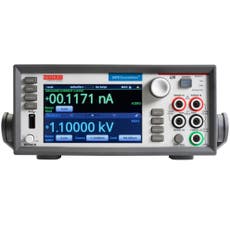
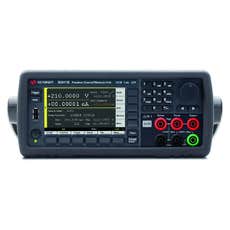
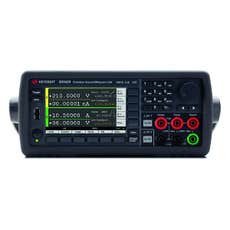
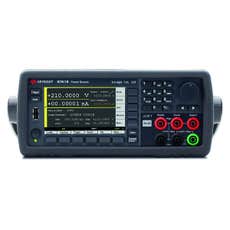
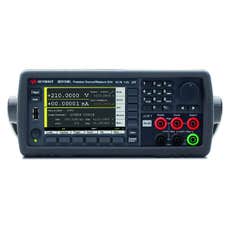
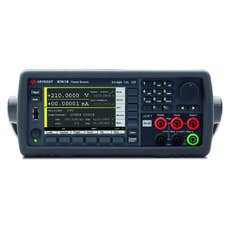
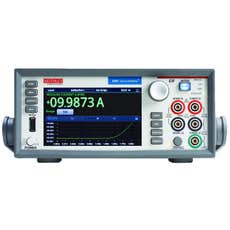
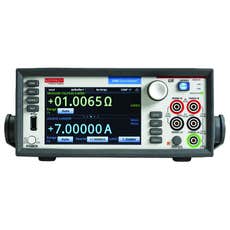
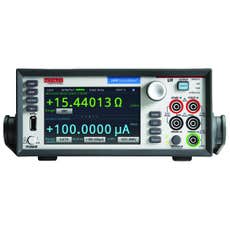
An SMU (Source Measure Unit) is a laboratory electronic instrument capable of sourcing a voltage or a current with very high precision while simultaneously measuring the applied voltage and/or current. It therefore combines the functions of a power supply, a digital multimeter, a current source, an electronic load, and a pulse generator in a single compact instrument. It can replace several traditional measurement instruments, simplifying test bench configurations.
Main functions:
> Voltage or current source: The SMU can apply a precise voltage or current to a device under test (DUT). > Simultaneous measurement: It measures voltage and current in real time, enabling accurate characterisation of the electrical behaviour of the tested component. > Four-quadrant operation: It can operate as a source or a load, with positive or negative voltage and current values, making it highly flexible. > High precision and resolution: Ideal for measurements requiring very high accuracy, particularly in materials research, semiconductor characterisation (transistors, diodes, LEDs, MOSFETs, etc.), and the evaluation of sensitive sensors and electronic components.
Here are some practical application examples: measurement of current–voltage curves of electronic components, analysis of low or very low current device performance, simulation of charge and discharge cycles and performance measurement, and study of new electronic materials or sensors.